
What is Respite Support
Caring for a loved one with a developmental disability is rewarding, but it can also be physically and emotionally demanding.
Many family caregivers provide support every day. They help with personal care, appointments, daily routines, community activities, and medical needs. Over time, those responsibilities can become difficult to manage without support.
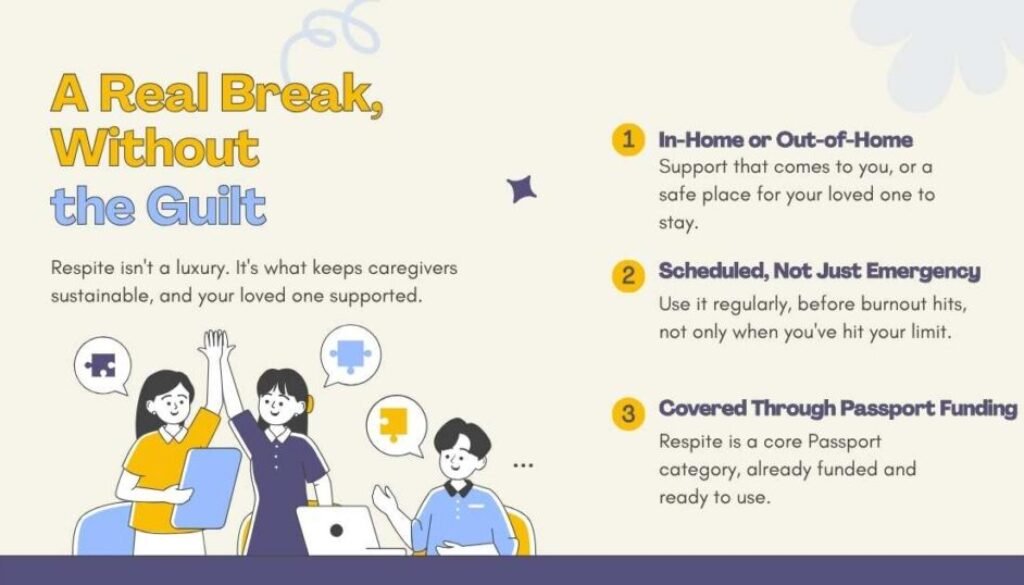
Respite support gives caregivers time to rest while their loved one continues to receive safe, reliable care.
What Is Respite Support?
Respite support is temporary care provided by a qualified support worker so a family caregiver can take a break.
The goal is simple. Your loved one continues to receive quality support while you have time to focus on your own health, work, family responsibilities, or personal needs.
Respite can be arranged in different ways, depending on your family’s situation.
In-Home Respite
A support worker comes to your home to provide care while your loved one stays in a familiar environment.
Community Respite
A support worker accompanies your loved one into the community for activities such as:
- Recreation programs
- Community outings
- Library visits
- Shopping
- Social activities
- Volunteer opportunities
Short-Term Respite
Some families arrange respite for longer periods, such as a full day or a weekend, depending on available services and funding.
The right option depends on your family’s needs and your loved one’s goals.
Who Can Benefit From Respite Support?
Respite is designed for unpaid family caregivers who provide ongoing care to an adult with a developmental disability.
You may benefit from respite support if you need time to:
- Attend appointments
- Go to work
- Spend time with other family members
- Rest and recharge
- Manage personal responsibilities
Many families schedule respite regularly instead of waiting until they feel overwhelmed.
A few hours each week can make caregiving more manageable over time.
How Can Respite Support Help?
Respite support benefits both caregivers and the person receiving support.
For caregivers, respite provides time to rest, reduce stress, and maintain a healthy balance between caregiving and other responsibilities.
For individuals with developmental disabilities, respite can provide opportunities to:
- Build new relationships
- Participate in community activities
- Develop independent living skills
- Increase confidence
- Try new experiences in a supportive environment
For example, while a caregiver attends a medical appointment, a support worker may help the individual visit a community centre, prepare a simple meal, or practise public transportation skills.
Paying for Respite Support
Many Ontario families use Passport funding to help pay for eligible respite services.
Funding rules and eligible expenses can change, so it is always best to confirm current requirements with your local Passport agency.
If you are unsure whether respite support is covered, ask before booking services.
How CareVia Support Can Help
At CareVia Support, we provide person-centred respite services that give caregivers peace of mind while helping individuals continue building confidence and independence.
Our respite support may include:
- In-home support
- Community participation
- Personal care assistance
- Independent living skill development
- Meaningful social and recreational activities
- Goal-focused one-to-one support
Every support plan is tailored to the individual’s strengths, interests, and needs.
We work closely with families to create a schedule that fits their routine while providing safe, consistent, and reliable support.
Ready to Take a Break?
Taking time for yourself does not mean you’re providing less care. It helps you continue supporting your loved one over the long term.
If you’re looking for reliable respite support for an adult with a developmental disability, CareVia Support is here to help.
Book a free Family Consultation today and learn how our personalized respite services can support both you and your loved one.